CHAPEAU (à mettre dans « Extrait ») :
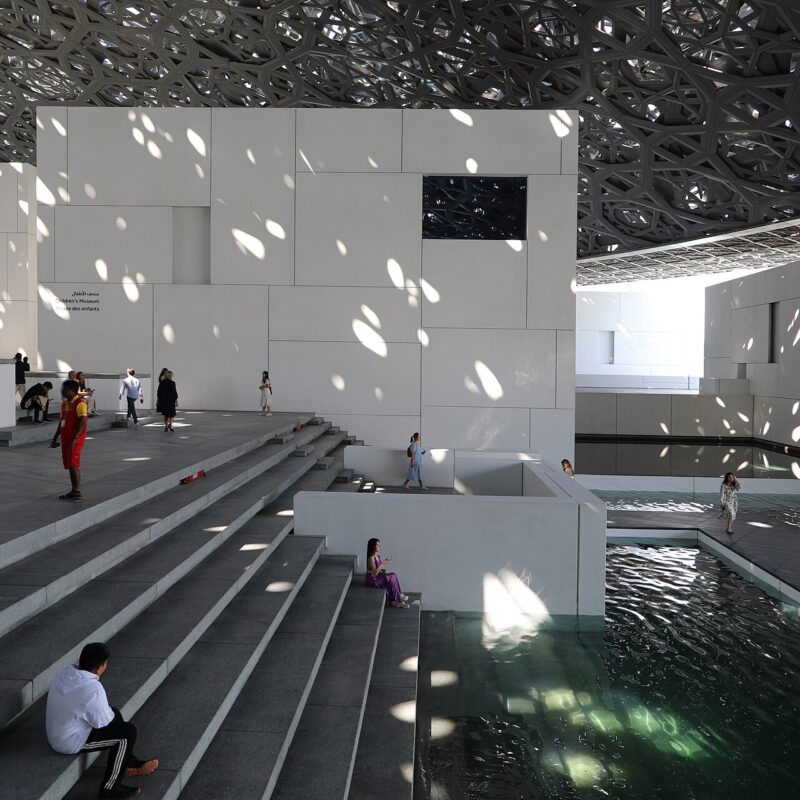
Louvre Abu Dhabi opened Living Legacies: Protecting Heritage, Building Hope this week, an exhibition organised with the Swiss-based heritage foundation ALIPH that brings together about 50 works from eight countries and turns the usually hidden work of conservators into the main subject, The National reported on November 25.
CORPS :
The show, which runs until April 25, 2027, closes the museum’s 2026-2027 season and marks the tenth anniversary of the International Alliance for the Protection of Heritage, known as ALIPH. Rather than presenting restored masterpieces as finished objects, it focuses on the process: photographs of specialists at work, video testimonies from communities and displays of the tools used to stabilise and repair damaged pieces.
“Generally, we consider this to be behind the scenes,” Guilhem Andre, the museum’s director of scientific, curatorial and collections management, told The National. “This time it’s on the stage.”
A foundation born in Abu Dhabi
The partnership has a local history. ALIPH was set up after the 2016 Abu Dhabi Conference on Safeguarding Endangered Cultural Heritage, an initiative led by the UAE and France. According to the figures presented with the exhibition, the foundation has since supported more than 650 projects in 65 countries.
The exhibition is curated by Magdalena Ruiz of Louvre Abu Dhabi with Sandra Bialystok and Bastien Varoutsikos of ALIPH, according to the museum’s season announcement published by the Abu Dhabi Media Office in June. Objects have been lent by international institutions and by organisations that have received ALIPH grants.
From Beirut glass to Mosul’s lost guardians
The roughly 50 works are arranged in seven sections and range from ancient artefacts and manuscripts to ceremonial costumes and contemporary art. One of the most striking displays features glassware from the Archaeological Museum of the American University of Beirut, shattered in the port explosion of August 4, 2020. Some vessels have been pieced back together, while others remain as fragments.
Bialystok, ALIPH’s director of communications and partnerships and a co-curator, said the Beirut pieces show “the immensity of the work to protect and to restore cultural heritage”, adding: “Sometimes it’s possible, and sometimes, unfortunately, it is not.”
Iraq is represented through Mosul, whose museums were looted and monuments destroyed between 2014 and 2017. An augmented reality experience developed by Snap with ALIPH lets visitors use their phones to see life-size reconstructions of the Lamassu sculptures destroyed at the Mosul museum in 2015. Only some colour has been restored, because researchers cannot confirm how the original paint was applied.
Other sections cover restored manuscripts from Djenne in Mali, ceremonial objects from Cameroon’s Grassfields region and a work by the Malian artist Abdoulaye Konate that draws on traditional craftsmanship. Architecture features through the mud-brick towers of Shibam in Yemen, Al Jahili Fort in Al Ain and a model of a fortress in Afghanistan.
Climate joins conflict as a threat
Beyond war and looting, the exhibition highlights environmental pressures on heritage: heavy rain eroding earthen buildings, extreme heat damaging manuscripts and rising seas pushing salt into coastal structures. Andre stressed that much of the protection work is driven by local communities rather than outside agencies. “We are not there to replace them, but to give them a voice,” he said.
A guide for children and young visitors invites them to play the roles of historian, archaeologist and conservator.
Read more
 PaperBack art book fair returns to Diriyah with 23 publishers from 19 countriesNovember 24, 2026
 Iris Projects plans Experimentale, a commissions space at Dubai’s Alserkal AvenueNovember 21, 2026
 Frieze Abu Dhabi opens first Middle East edition with 89 exhibitors at Manarat Al SaadiyatNovember 20, 2026
 Emirati sculptor Shaikha Al Mazrou unveils Two Horizons at Abu Dhabi Cultural FoundationNovember 15, 2026