Few living artists carry as much of modern Iraqi art history on their own shoulders as Dia Al-Azzawi. Born in Baghdad in the late 1930s, Al-Azzawi came up through the city’s mid-century modernist movement before building a decades-long practice from exile in London following his departure from Iraq. A current solo presentation at Dubai’s Meem Gallery, spanning work from across that long arc, functions less as a retrospective in the traditional museum sense than as a condensed argument for why his career still matters to anyone trying to understand Arab modernism as a whole.
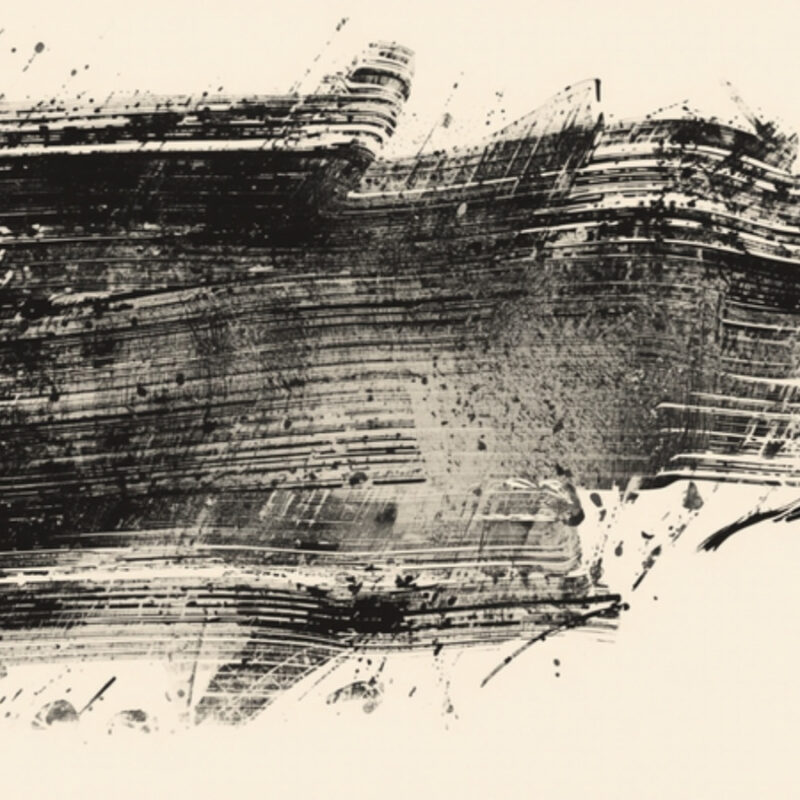
What’s striking in a body of work this large is how consistent certain instincts remain even as style and medium shift. Al-Azzawi’s line work — whether in painting, print, or his extensive work on paper — has always carried a kind of calligraphic confidence, informed by his early training and lifelong engagement with Arabic script, even in pieces that have nothing literally to do with text. That continuity holds across work made in Baghdad in the 1960s and work made in London decades later, suggesting an artist whose formal vocabulary was settled early and then deepened rather than reinvented.
His subject matter has rarely stayed comfortable. Al-Azzawi’s engagement with violence and political upheaval in Iraq — most notably his large-scale responses to the 1982 Sabra and Shatila massacre — places him firmly in a tradition of Arab artists using modernist formal languages to process historical trauma directly, rather than retreating into abstraction or decorative gesture. That willingness to meet difficult subject matter head-on, without losing the formal rigor of his training, is part of what separates his generation of Iraqi modernists from some of the more market-friendly figurative work currently dominating regional fairs.
Seeing that range gathered in one gallery presentation also says something about how the Gulf’s exhibition infrastructure has matured. A show of this ambition — spanning six decades of a single artist’s practice, with the loans and documentation that requires — would have been a difficult undertaking for a commercial gallery in the region even a decade ago. That it’s now a matter of course speaks to how much institutional and curatorial capacity Dubai’s gallery scene has built up around artists like Al-Azzawi, whose reputations were established well before the Gulf’s current art infrastructure existed to properly honor them.
For younger audiences encountering his work for the first time through a gallery setting rather than a textbook, the show offers something straightforward: proof that the modernist tradition driving so much of today’s regional art conversation has a living source, still working, still worth paying attention to directly rather than through the generation of artists he influenced.