The oud, the short-necked, fretless lute at the heart of Arabic music, is heading for a decision at UNESCO. A joint nomination filed by 16 Arab countries is among 62 files that the UN cultural agency’s intergovernmental committee on intangible cultural heritage will examine at its annual session in Xiamen, China, which runs from Monday 30 November to Friday 4 December, AFP reported on Friday.
A rare multinational file
The oud bid is one of 18 multinational nominations on this year’s agenda, a format UNESCO encourages for traditions shared across borders. Coverage of the file by AFP, relayed by Al Arabiya and Lebanon’s Annahar, describes the instrument as one whose characteristic melodies are heard in cafes, at weddings and on film soundtracks across the Arab world. French daily 20 Minutes, also citing AFP, reported that the oud is expected to join the lists during the session, alongside Chinese cuisine, the other headline nomination of the year.
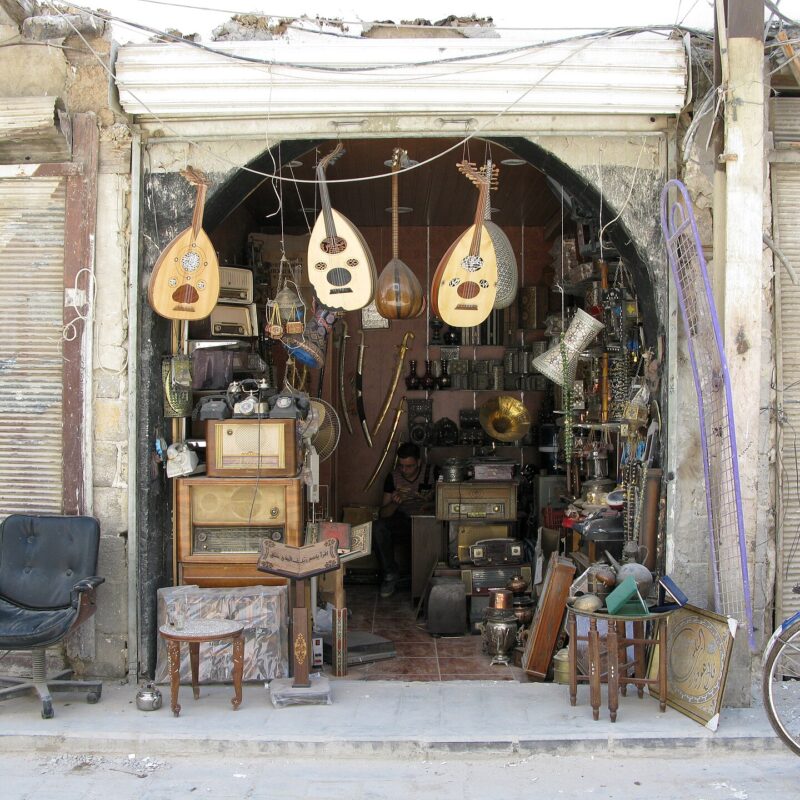
The instrument takes its name from the Arabic al-oud, meaning “the wood”. It has a rounded, pear-shaped body, a short neck and a variable number of plucked strings, and it is also widely played in Armenia, Greece, Azerbaijan and Turkey, AFP noted.
What inscription would mean
UNESCO’s intangible heritage lists do not protect objects but living practices: the skills, knowledge and social customs that communities pass from one generation to the next. For the oud, that covers the craft of the luthiers who build the instrument as much as the musicians who play it and the teaching traditions that sustain both. Inscription carries no funding obligation in itself, but it commits the nominating states to safeguarding measures and tends to raise the international profile of the practice concerned.
According to the figures cited by AFP, UNESCO’s three lists currently hold 849 elements from 157 countries: 716 on the Representative List of the Intangible Cultural Heritage of Humanity, 90 on the List of Intangible Cultural Heritage in Need of Urgent Safeguarding and 43 in the Register of Good Safeguarding Practices.
The rest of the Xiamen agenda
The 21st session of the committee will also consider several food traditions, including baklava and traditional Maya sauces, as well as a joint file from Kazakhstan, Kyrgyzstan, Tajikistan, Iran, Azerbaijan, Turkey and Mongolia on felt-making. Ukraine, Poland and Lithuania have jointly nominated their Christmas Eve traditions, while Poland, Austria and Luxembourg have put forward the miners’ feast of Saint Barbara, celebrated on 4 December.
Four African countries are set to see elements inscribed for the first time: Lesotho with its conical mokorotlo hat, South Sudan with a funeral rite, Eswatini with its marula festival and Tanzania with singeli music. Barbados has nominated road tennis, a game that emerged in the 1930s when Black Barbadians were excluded from the island’s lawn tennis clubs.
An instrument at the centre of Arabic music
For listeners of Arabic music, the oud needs little introduction. It anchors the takht ensembles of classical tarab, carries the improvised taqasim that open many songs and has long been the composing tool of the region’s great melodists. A favourable decision in Xiamen would give that shared repertoire, and the workshops from Cairo to Baghdad and Damascus where ouds are still built by hand, a formal place on the world heritage map. The committee’s decisions are expected over the course of the week.
Sources:
- Al Arabiya (with AFP), 27 November 2026
- 20 Minutes (with AFP), 28 November 2026
- Annahar, 27 November 2026
Read more
 Saudi composer Mamdouh Saif blends orchestra, techno and Saudi rhythms on Story of a DropNovember 28, 2026
 Algarabía brings flamenco, oud and Arabic poetry to Abu Dhabi FestivalNovember 27, 2026
 Beirut unveils a statue of Ziad Rahbani at his piano in the National Library gardensNovember 26, 2026
 Wegz releases Diaa Diaa as title track for Ahmed Malek comedy Leila Bazet KhalesNovember 25, 2026