Conversations about Palestinian art tend to gravitate quickly toward politics, and understandably so — occupation, displacement and resistance are inescapable themes across generations of Palestinian cultural production. What gets discussed less often is the specific formal lineage much of that work actually comes from, and Ramallah’s Gallery One has spent its recent regional fair presentations making a quiet but insistent case for one particular thread: the deep influence of Cairo’s academic painting tradition on generations of Palestinian artists.
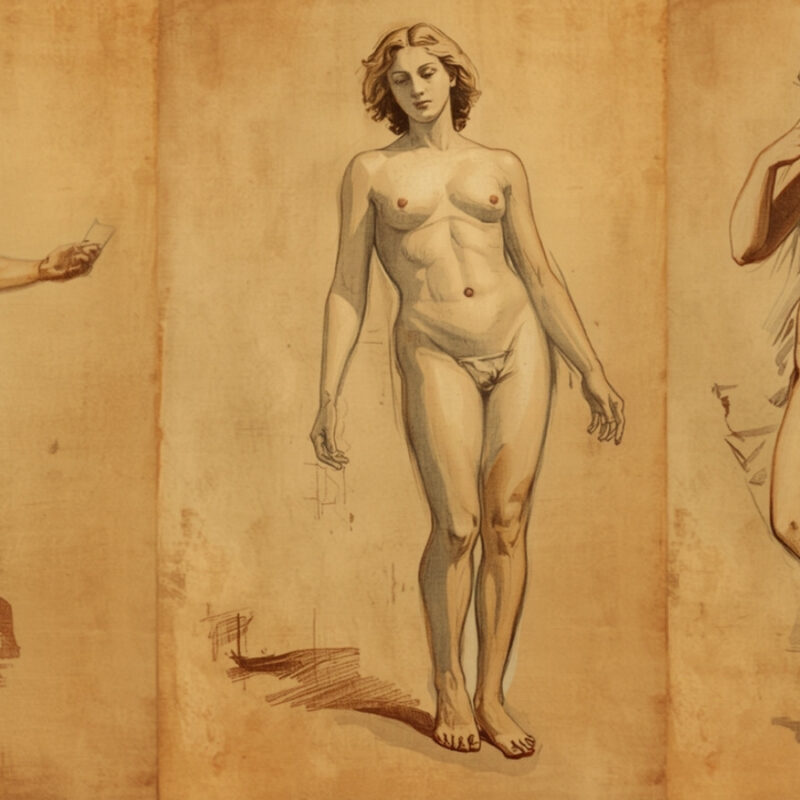
That connection makes more historical sense than it might first appear. Through much of the twentieth century, Cairo functioned as one of the Arab world’s central hubs for formal art education, and Palestinian artists seeking rigorous academic training — in anatomy, composition, classical technique — often ended up studying there, absorbing an approach to painting rooted in European academic tradition filtered through Egyptian modernism. That training then traveled back into Palestinian artistic practice, shaping how generations of painters approached figure, landscape and composition even as their subject matter remained firmly rooted in Palestinian life and history.
Gallery One’s recent programming treats that lineage as worth tracing deliberately rather than leaving implicit. Presenting both contemporary and earlier modern work side by side allows a direct comparison: the formal discipline of academic figure painting, learned in Cairo decades ago, still visible in how younger Palestinian painters construct a composition today, even when their subject matter and political context have shifted dramatically.
There’s an argument embedded in that curatorial choice that goes beyond art history for its own sake. Framing Palestinian art primarily through the lens of its political content — important as that content is — can inadvertently flatten it into a single register, read mainly for what it says about conflict and dispossession rather than for the specific formal traditions and training that shaped how it says it. Gallery One’s insistence on the Cairo connection pushes back against that flattening, asking viewers to engage with technique and lineage alongside, not instead of, political and historical context.
That’s a useful corrective for a regional art conversation that can be quick to sort work into simple categories — political art here, formal or academic concerns there — when the more honest picture, at least in the case of Palestinian painting, is that both have always been present at once, inherited from Cairo’s classrooms and then put to entirely different use back home.